Sunday, March 30, 2008
Shotgun Stories
 The opening night film of this year's San Francisco IndieFest, a dramatic tale of family feud, "Shotgun Stories" (USA 2007, 92 min.) will open in Bay area theaters on April 4.
Set in Arkansas, the film begins with the death of Mr. Hayes who fathered two sets of half brothers. Hayes abandoned the first three brothers who he even didn't bother to give them proper names other than Son, Boy, and Kid. Then Mr. Hayes became a devoted Christian, married a new wife, and fathered four more brothers. Now they are all grown up, the feud between the two sets of half brother gets deeper, and is escalated after Son Hayes's spitting on Mr. Hayes's coffin at the funeral. The story is told mostly from the perspective of Son, Boy, and Kid. All of them seem forever damaged and holding back the rage living off a country road with a backdrop of cotton fields. Son deals with his gambling problem; Kid lives in a tent in Son's backyard; Boy lives in a van down by the river. All of them have lifeless sad low voices. They don't seem have any hope of the future and just get by day after day, sitting in the front porch drinking beer while watching the cars passing by on the road. The only thing can get them up and running is to take revenge to the other sets of brothers. It's utterly depressing watching the story unfold. While the film is very effective telling a harsh story about "rednecks" (they have to be rednecks when they cool themselves on a picnic table in the backyard using an air-conditioning found in the trash), it does little to invoke any sympathy from the audience. I think the typical reaction to the story would be like: "Yup! They are miserable." Surely they are. |
Labels: SFIndie08


Death Note (デスノート)
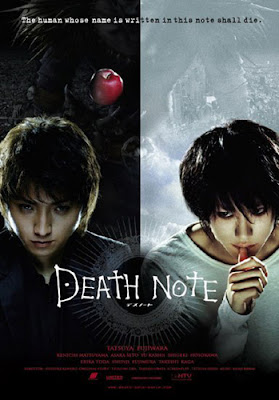 What would you do if you have the power over other human beings? This seems a never ending subject that fascinates us. Base on a popular comic series (which I have not read), Japanese sci-fi thriller "Death Note (デスノート)" (Japan 2006, 126 min.) entertains this scenario with interesting protagonists and gripping plots.
Light Yagami is an extremely intelligent law student who is frustrated about the justice system's failing on some criminal cases. On a rainy night, a notebook dropped from the sky in front of him—the "Death Note" from Ryuk, God of Death (死神). Surprisingly, the death note is written neither in Japanese nor some strange languages, but in English. It instructs Light that if he writes somebody's name on the notebook, that person dies. Advanced deaths can be also scheduled like in a calendar, and methods of death can also be specified. Now Light has got the power. Light uses this super power on the criminals first. As expected, criminals around the world are dropping dead like flies. He is cheered by the public and given a name Kira. However, the government treats Kira as a serial killer. The hunting for Kira is led by an equally intelligent young man named "L," who looks like he has been doing nothing in the last few days but playing video games and eating sweets. A dazzling catch-me-if-you-can game begins that fills with wits and excitements.
Although at the beginning, the film raises philosophical questions about the justification for killing criminals using the death note, the morality aspect never becomes the main focus of the film. Instead, the mind game between Kira and L takes the center stage, which is truly entertaining and well executed in the film. Like "Kill Bill," this film is the first part of the two volumes, I wish that they were played back to back. Now I am so eager to see what happens next in "Death Note: The Last Name." No matter what happens, I hope Kira will write the name "Hollywood" on that death note to prevent Hollywood from remaking these two films. "Death Note (デスノート)" was shown at the 26th San Francisco International Asian American Film Festival (SFIAAFF). |

Labels: SFIAAFF2008
Friday, March 28, 2008
A Gentle Breeze in the Village (天然コケッコー)
The film is set in a small remote village. Because there are only five school children, the primary school and middle school are combined together. One day, a handsome new student Hiromi Osawa joins the school. He becomes a gentle breeze in the small village, at the school, and in the heart of the eldest student Soyo. Using nothing more than the daily simple lives in the small village and at school, the film tells a tender story about these lovely characters. Everyone has its own childhood memories, especially those from primary school and middle school. This film surely brings out the nostalgic sentiment. We can all identify with these children's experiences, even theirs might be quite different from ours. We are drawn to this quiet soothing small village and the people who live there. I wish my school had a daily broadcasting of "lunchtime news" announcing the serving of "get-along rice." I wish I were growing up in that village. The film is beautifully shot, brilliantly directed, and terrifically performed. The pace perfectly matches the quiet peaceful country life, yet never loses the engagement with the audience.
It's a wonderful charming film that warms our hearts and brings out our smiles. "A Gentle Breeze in the Village (天然コケッコー)" was shown at the 26th San Francisco International Asian American Film Festival (SFIAAFF). |


Labels: SFIAAFF2008
Thursday, March 27, 2008
Wings of Defeat
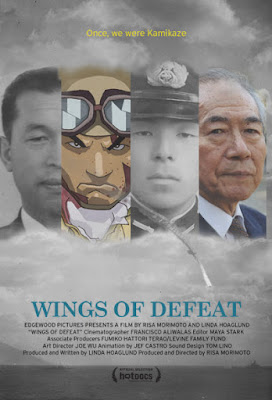 In the era of post 9.11, when we hear "suicide bombers," images of horrific explorations in Mideast or Iraq are most likely to come to mind; probably not images of Japanese teenagers. An extraordinary documentary "Wings of Defeat" (USA/Japan 2007, 90 min.) tells the largely ignored stories about kamikaze (神風) pilots, who dove their aircrafts into allies' war ships during World War II.
Toward to the end of World War II, instead of using the air force to protect Japan, Japanese military trained kamikaze (神風) pilots to carry out suicide attacks against allies' force. Many of these pilots are just young boys from high schools. These young men are trained and sent to die for the country and the emperor. A total of 3912 kamikaze pilots died of their suicide attack missions. After director Risa Morimoto discovers that her uncle was trained as a kamikaze pilot, she begins to investigate the untold stories behind these brave youths. Through candid interviews from survival kamikaze pilots and rare historical footage, the documentary reveals the mindsets of those pilots, the cruelty of war and the government, and the urgency of peace. It's incredibly sad to learn that many of these young boys are ordered to die as kamikaze pilots, contrary to the belief that they volunteered to die as patriots. Watching this documentary, it is hard not to make the connection between the kamikaze pilots and the suicide attacks in Mideast, or in New York City. To the victims of these attacks, the attackers are fanatic terrorists. However, on the other side of the table, they are bravery heroes sacrificing themselves for their countries or religions.
This compelling documentary makes me hope that one day, John Lennon's dream comes true when there won't have any kamikaze pilots alike:
"Imagine there's no countries "Wings of Defeat" was shown at the 26th San Francisco International Asian American Film Festival (SFIAAFF). |

Labels: SFIAAFF2008
Monday, March 24, 2008
Buddha Collapsed Out of Shame (بودا از شرم فرو ریخت)
 When Iranian director Hana Makhmalbaf was 14 years old, she made a documentary called "Joy of Madness." When she became 18 years old, she made a compelling first dramatic feature "Buddha Collapsed Out of Shame (بودا از شرم فرو ریخت)" (Iran 2007, 81mins), which won the Crystal Bear for the Best Feature Film at this year's Berlin International Film Festival.
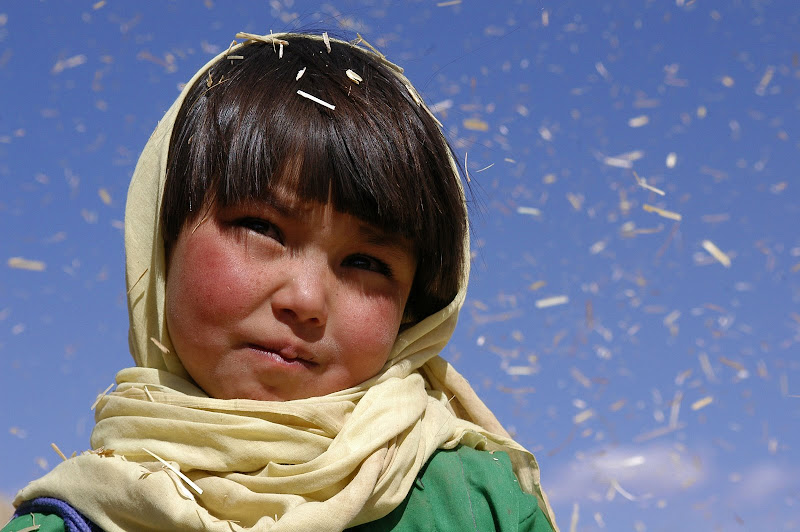
In 2001, the Tiliban blew up Buddhas statues in Afghanistan. Like many Afghanis, six years old Bakhtay live in one of the empty caves, with a next cave neighbor Abbas, a seven years old boy who just begins to attend school. Bakhtay is fascinated by the idea of going to school like Abbas does. After her mom goes out to get water from the river, she ties her infant sister's leg to a pole, and begins her incredible journey to get a notebook and a pen, so she can attend school and learn "a funny story about a man sleeping under a walnut tree." However, to complete her mission, she must overcome crude bullies from other boys who do nothing but play violent "war games." Bakhtay's going to school story is deeply moving and profoundly sad. The living condition and education resources in Afghanistan are shockingly miserable. It's heartbroken to see what Bakhtay has to go through in order to get a notebook. Even she never has enough money to get a pen, she is smart enough to find a substitute — her mom's lipstick. Although the film deals with a very heavy subject, it never steers away from the fact that Bakhtay is just a six years old girl. She is not capable of evaluate the danger around her, she cries: "I don't like war play."
Watching the gripping story unfold in a documentary style, I am frightened by the violence these children are exposed to and learning from, I am saddened by the reality these children have to live in, and I am touched by Bakhtay's innocence. I hope Bakhtay has a notebook and a pen by now. "Buddha Collapsed Out of Shame (بودا از شرم فرو ریخت)" was shown at the 26th San Francisco International Asian American Film Festival (SFIAAFF). |
Labels: SFIAAFF2008
Friday, March 7, 2008
10,000 B.C.
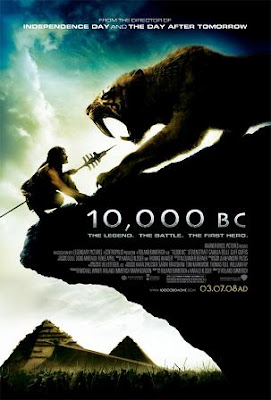 The budget of "10,000 B.C." (USA 2008, 109 min.) is 75 million dollars. Will this much money bring us back to 12,000 years ago? Not a chance. This ridiculous film has little to offer except its expensive CGI work.
As the title suggested, the story is set in 10,000 B.C. D'Leh is living in a tribe somewhere on earth surrounded by gorgeous snow covering mountains, deadly sandstorm desert, and water pouring jungles. Evolet is the woman D'Leh loves, but she and other tribe members are captured by a warlord. Thus, heroic D'Leh goes on a quest to rescue Evolet by awakening the slaves to start a riot. It sounds like a plot lifted from a children's book, only less convincing. There is not one single believable or interesting character in the film. Never mind how they can go from place to place magically, without helicopters. Actually they don't even carry food and water with them, but they can cross the dessert, climb over mountains, and just show up anywhere the director want them to be. I am not old enough to listen how people talk 10,000 years ago, now thank this film, I now know that they talk in English with a very heavy weird accent. When I was watching the film, these characters remind me the homeless people on the streets in the notorious Tenderloin area in San Francisco. They look dirty, hungry, drugged, and confused. These characters have similar hairdos like those homeless people and even babble nonsense continuously. When those slaves bring out a blind guy from underground where they have been hiding (year right!), he looks just like someone randomly grabbed from streets in Tenderloin.
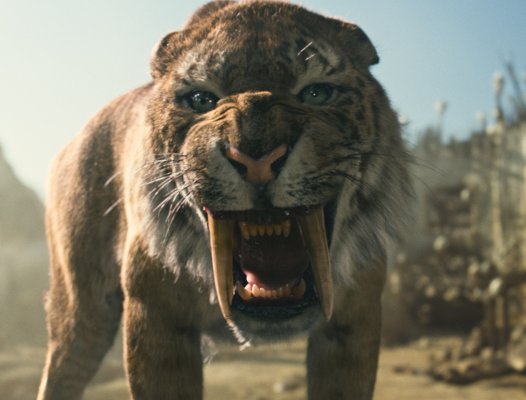
The entire movie is aiming to showing off the CGI work ostentatiously, disregarding stories and characters. At some point, it even brings out a big cat with big teeth. What does the cat do? Absolutely nothing, except to open the mouth to show the big teeth. If San Francisco had this cat, the tregedy would have been avoided. People should give the money to those homeless people on the streets in Tenderloin, instead of filling the $75 million hole. |
Paranoid Park
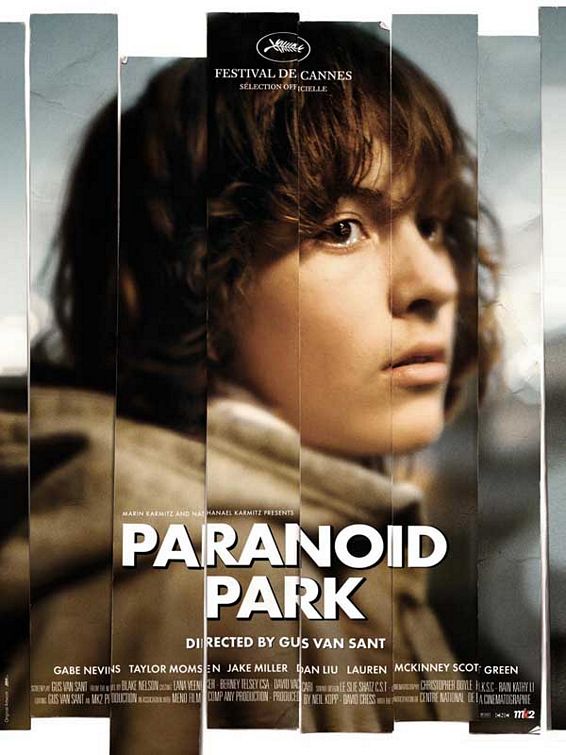 After winning the Prix du 60ème Anniversaire Award last year at the Cannes Film Festival, and closing this year's San Francisco IndieFest couple weeks ago, director Gus Van Sant's "Paranoid Park" (USA 2008, 78 min.) will open in Bay area theaters on Friday, March 14.
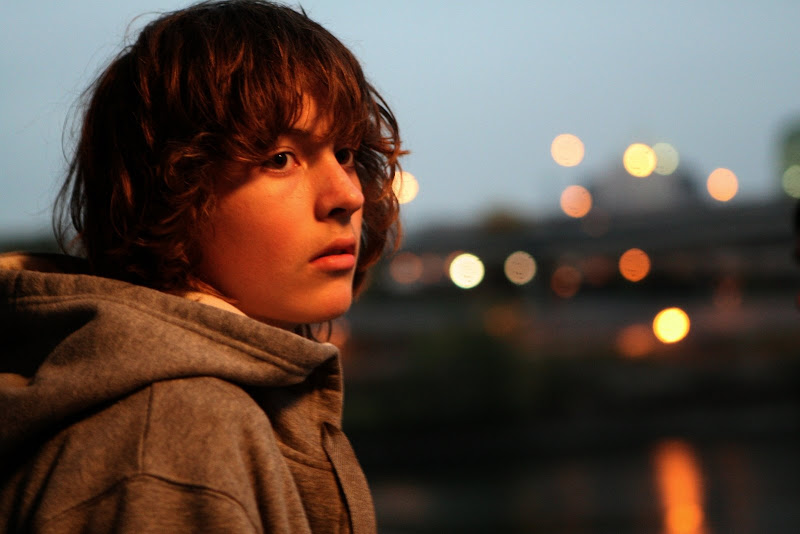
The story is fairly simple. Set in Oregon, Portland, a shy teenage skater Alex (Gabe Nevins) copes with parents' divorce, girlfriend's pressure, and other typical issues in an adolescence's life. One evening, after visiting Paranoid Park, a popular hang out spot for skaters, Alex has to deal with a challenging dilemma, which shifts his focus and energy dramatically. Most actors in the film, including the lead Gabe Nevins, are cast through MySpace, a popular yet obnoxious social networking Web site. There is not really much noteworthy acting per se. However, the careful composition in story telling, the affectionate music, and the rich visual impeccably calibrate the protagonist's emotional development. Seemingly routine daily activities begin to reflect the anxiety in Alex's frightened mind. He wishes that he were in a nightmare and he would be to snap out of it. Instead, he continues to be consumed by it, and we feel for him in this film.
Alex's preppy face, long hair, and innocent look reminds me of director's previous film "Elephent", which has characters with a similar look. Somehow, I feel Alex must have that long hair. At least it matches the long grass on the beach when he writes to get things out of his chest. However, I feel the slow motion in the film is a little too excessive. People might get the wrong idea when a boy turns his head in a car to his buddy in slow motion like he is in a shampoo commercial. Then he blinked, which looks like a wink when in slow motion. Even this is a beautiful film to watch, I wanted it to end in the theater, so Alex can finally snap out of his misery. |
Labels: SFIndie08

