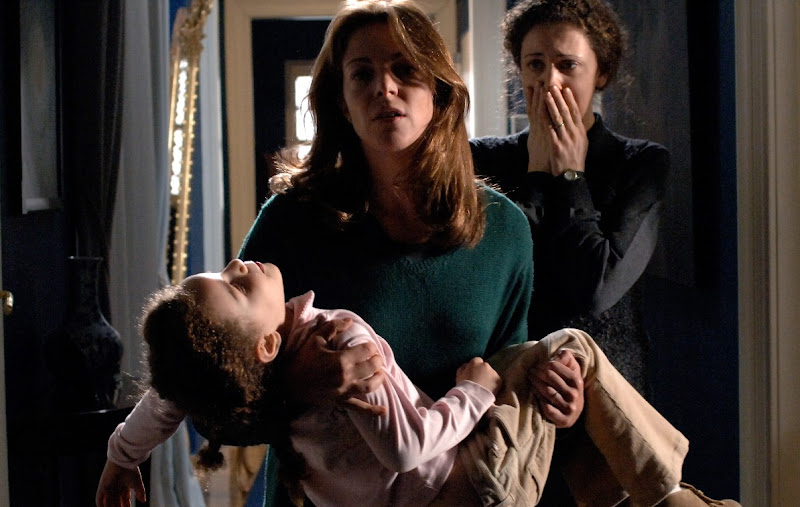
Surely it's a tough time right now for many when the gloomy economy gets worse and worse. However, no matter how tough it might be, it is probably less significant compared to what those characters in "Morris County" (USA 2008, 91 min.) have to deal with. If the film's unsettling and sometimes heartbroken stories do not overwhelm the audiences, its disturbing images would. It is definitely not for the weak stomach, or any stomach.
Director Matthew Garrett expands his 2006 short film "Ellie" into his feature debut "Morris County" by adding two more stories: "The Family Rubin" and "Elmer & Iris." All three stories are supposed to be happening in Morris County (NJ), which could be any suburbia town in America.
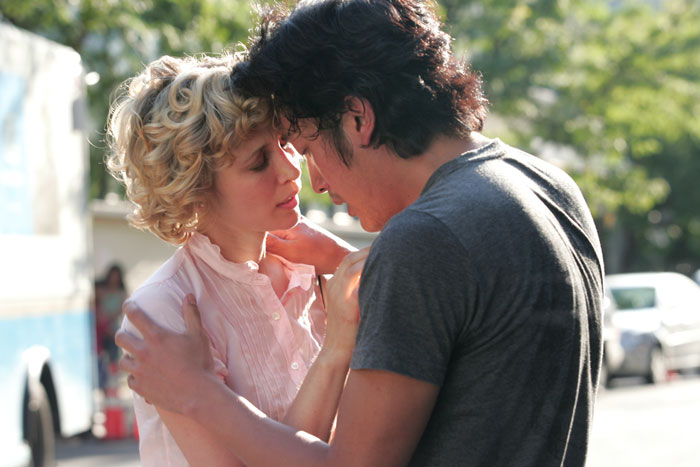
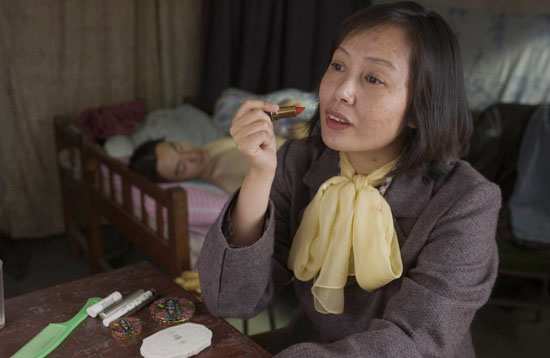
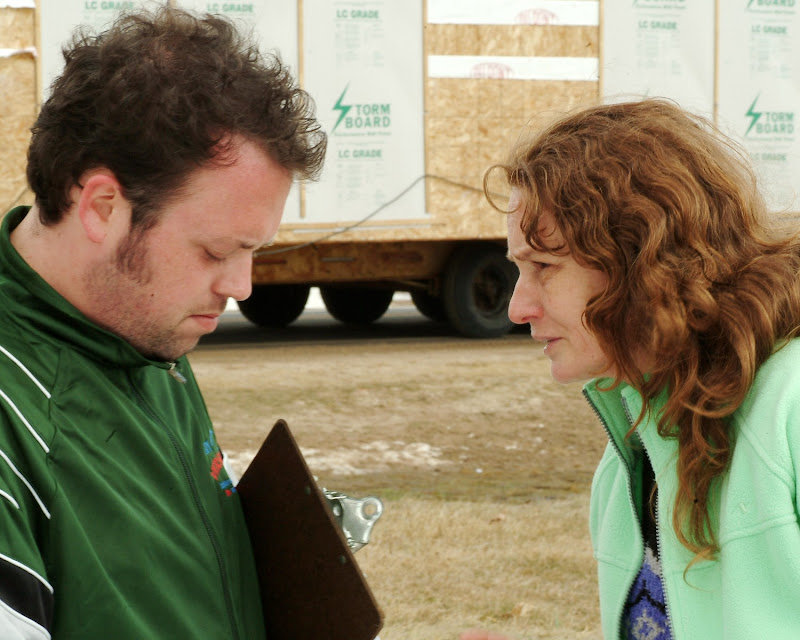
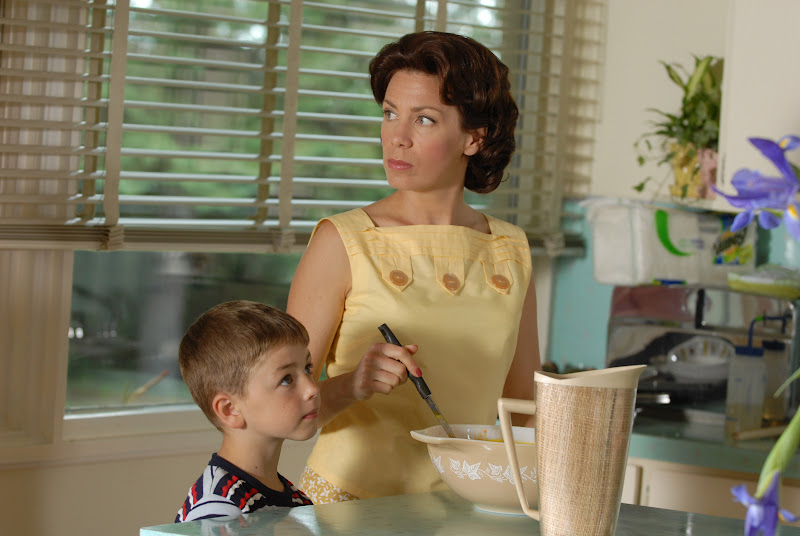
In "Ellie," 17 years old girl Ellie sees no way out when she copes with her devastating secret. Her reckless acts only deepen her troubles instead of find her an escape. In "The Family Rubin," the husband and wife keep a secret from their young son and the outside world. When the secret is about to be exposed, the desperate husband takes an extreme measure. In "Elmer & Iris," a loving old lady Iris works as a secretary and treats her co-workers as her own family. After she is laid off, she returns to the only family left for her — her husband Elmer. Her daily life seems normal as usual by looking from outside of her house, the truth is anything but normal.
All three stories share one common trait — seemingly normal lives in the suburbia America are filled with secrets and horror, and people are feeling hopeless and despair. The film offers not even a slight hint of hope or comfort. It is uncompromising and utterly depressing.
As always, because it has become very difficult to classify which year a movie should belong to, I put together my top-ten films among those I saw in 2008.
Among famous revolutionaries, besides Mao
Zedong (毛泽东),
perhaps Ernesto
"Che" Guevara is the most recognizable historic
figure as well as a pop
culture icon. Around the world, many wear Che's image
as a fashion statement without knowing Che's story, while
many others are inspired by Che's bigger than
life legacy
and hold him dearly in their hearts as a hero.
Che was an Argentine physician who became involved in
political movements fighting capitalism, neocolonialism,
and imperialism which he believed to be the root of the
poverty in Latin America. At the age of 27, Che
met Fidel
Castro in Mexico in 1954 and jointed a group
called "26th
of July Movement." The goal of the organization is to
overthrow Cuba's Fulgencio
Batista government by a guerrilla force.
On 26 November 1956, Che sailed to Cuba with Fidel Castro
and other rebels. Eventually, he rose to a revolutionary
hero in Cuban
Revolution.
After the victory of Cuba Revolution in 1959, Che was
proclaimed a "Cuban citizen by birth" and served as
Industry Minister and the president of Cuban National
Bank. He traveled around the world to as the spokesperson
of socialist Cuba.
In 1965, Che suddenly disappeared from public eye without
a trace. Fidel Castro revealed a letter from Che that
declared his intention to leave the power and fame in
Cuba and to help the fight in other country's
revolution. Later, Che reemerged in Bolivia as a leader
of an underground guerrilla group consists of Cuba
comrades and Bolivian recruits. Che was captured and
executed on 9 October 1967.
Director Steven
Soderbergh's ambitious effort to bring Che's story to
an epic on the big screen results in not only one, but
two feature films: "Che: Part
One" (USA 2008, 129 min.) tells Che's story
during the Cuban Revolution;
and "Che: Part
Two" (USA 2008, 128 min.) focuses on Che's
guerrilla campaign in Bolivia.
Che: Part One
"Che:
Part One" (USA 2008, 129 min.) (also
called "The
Argentine," although I did not see this tile in
the film) begins with the meeting where Che meets
Castro for the first time in Mexico and chronicles
the Cuba Revolution led by Castro and Che. Jumping
in and out of their battles in Cuban's countryside,
the film reenacts Che's visit to
the Unite
Nation in New York City during his tour around
the world.
The film does a brilliant job to narrative the vast
amount of materials and historic contents into a
129 minutes motion picture. A heroic, intelligent,
brave, inspiring, charismatic, disciplined, and
confident revolutionary vividly lives on the big
screen through Benicio
Del Toro's impeccable performance. The film is
a tribute and celebration to Che's idealism,
dedication, and sacrifice.
When Che was asked to identify the most important
quality of a revolutionary, his answer is "Love."
That explains why Che passionately fights for what
he believes in, and nothing can deter his
determination.
https://www.imdb.com/title/tt0892255/
CHE Part One
Like the speech Che gives at the podium of the the Unite
Nation, shot beautifully in black and
white, "Che: Part
One" has an uplifting tone of victory and
exhilaration. This is one of the best films I have seen
in 2008.
Che: Part Two
"Che:
Part Two" (USA 2008, 128 min.) is also
called "Guerrilla,"
a title again I fail to find in the film. This film
entirely focuses on Che's underground guerrilla war
effort in Bolivia. Che wants to start a revolution in
Bolivia and repeats the victory in Cuba.
After Che disappeared at his fame and power, he
reemerges secretly in Bolivia to lead a guerrilla
group. However, he does not have the support and
alliance as during the Cuba Revolution. The film
shows how he loses one battle after another one to
the Bolivia Army. In the end, he is captured and
executed.
The condition is horrendous in Bolivia mountains, yet
Che's spirit and courage are never shaken. He
continues to fight until his last breath for his idea
and his belief.
"Che:
Part Two" has a much different tone
as "Che:
Part One." The film seems showing nothing
but how Che is defeated and how he is leading the
guerrilla group on the run, instead of attacking. It
is quite depressing.
It would be better if the film contained more
historic background and more character
development. Instead, the film tells the story like a
documentary and follows the exhausted guerrilla
fighters escaping from one ambush to another
one. Besides Che, I can hardly tell Che's comrades
apart, especially when they wear the same uniform and
the same beard.
CHE Part Two
Perhaps I am so impressed by the Che's valorous figure in Part One that I reluctant to see him falling in Part Two.
If we are smart at choosing the food, what we eat can keep us alive and healthy. Otherwise, what we put into our body can make us sick or even kill us. Of course, everybody knows this. However, hardly everybody agree that a specific diet based on organic food can cure cancer. Not just some forms of cancer, but any cancer. That's precisely what a documentary "The Beautiful Truth" (USA 2008, 93 min.) enthusiastically claims—Got cancer or other diseases? Try Gerson therapy.
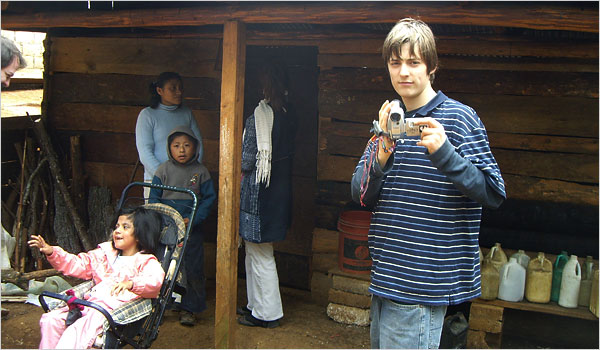
The film follows 15-year-old Alaskan Garrett's home-school assignment to study a controversial book written by Dr. Max Gerson that claims diet can cure cancer. He sets off to find the truth about these claims by interviewing many doctors, patients, scientists, and Gerson Institute staff members. He finds out the "beautiful truth"—virtually all cancers and chronic diseases can be cured by Gerson therapy, contrary to the opinions from medical communities and the pharmaceutical industry.
I am sure that many Gerson therapy patients and Whole Foods Market shoppers would warmly embrace Garrett's finding. For everyone else, the film will not convince them to begin to practice the key elements of the Gerson therapy: a strict diet including dietary supplements and coffee enemas.
I certainly agree that removing toxicants through diet is very crucial to improve one's health and to boost body's immune system. This theory is very much agreeing with principles of traditional Chinese medicine. However, I am very much skeptical about diet's effectiveness on curing cancer. As much as I want to believe that the Garson therapy indeed benefit many patients, I am disappointed that the film does not present the data scientifically. Therefore, the claim has no power by the end of the film. If I were the tutor for Garrett, his assignment on Garson research would have come out differently, which would make more sense.
Writer/director Steve Kroschel wraps up his film by sounding out quite a few words as if he was giving an eulogy—"It doesn't matter how many you know, but how many will miss you when you are gone." Perhaps he is trying to distract my thought from figuring out if the claimed "beautiful truth" in this film is actually the truth.
Even though I need more research to come up any conclusion about Garson therapy, after hearing in the film how coffee does to my body, I quit drinking coffee. I drink more tea.
 Surely it's a tough time right now for many when the gloomy economy gets worse and worse. However, no matter how tough it might be, it is probably less significant compared to what those characters in "Morris County" (USA 2008, 91 min.) have to deal with. If the film's unsettling and sometimes heartbroken stories do not overwhelm the audiences, its disturbing images would. It is definitely not for the weak stomach, or any stomach.







 If we are smart at choosing the food, what we eat can keep us alive and healthy. Otherwise, what we put into our body can make us sick or even kill us. Of course, everybody knows this. However, hardly everybody agree that a specific diet based on organic food can cure cancer. Not just some forms of cancer, but any cancer. That's precisely what a documentary "The Beautiful Truth" (USA 2008, 93 min.) enthusiastically claims—Got cancer or other diseases? Try Gerson therapy.