Although SFFILM
Festival took on this new name from the San Francisco
International Film Festival five years ago, it
continuously counts the number of years it has showcased
world cinema. If you ignore the cancellation in 2020 due
to the Covid-19 pandemic, this year marks the 65th
edition in the festival's history, which makes it the
longest running film festival in America. This is also
the first time since the pandemic that the festival is
returning to in-person screenings.
From April 21 to May 1, 2022, the 65th edition will
exhibit 130 films representing 56 countries and
regions. Among them, there are a total of 33 narrative
features, 24 documentary features, 5 mid-length
(30-60 minutes) films, and 65 shorts.
Even though the festival's duration is still unchanged,
the number of feature films at the festival has been
downsized dramatically compared to just a few years ago,
and even more compared to the 72
narrative features and 33 documentaries ten years
ago.
(You may click on each still image for the corresponding
screening or event's show time and ticket
information.)
Stay
Awake (Photo: Courtesy of SFFILM)
The 11-day festival opens on
Thursday, April 21, at the grand Castro
Theater with the director Jamie
Sisley's poignant drama "Stay
Awake" (USA 2022 | 95 min.). It follows the
journey of two teenage brothers, terrifically played
by Wyatt
Oleff and Fin Argus,
who try to save their mom from her prescription drug
addiction while they want to pursue their own dreams. The
film reveals the personal struggles that are often behind
closed doors in many families during the opioid crisis.
892
(Photo: Chris Witt)
A week later, the festival's centerpiece film is the
director Abi Damaris
Corbin's thrilling drama "892"
(USA 2022 | 103 min.). Based on a true
event, the film unfolds the story of a veteran who robs
a bank demanding $892, the amount that Veteran
Affairs has withheld from him, to make a
statement about his desperate situation. The film won
the Special Jury Award at this year's Sundance Film
Festival featuring a powerful performance
by John
Boyega as the protagonist.
Cha Cha Real Smooth
(Photo: Courtesy of SFFILM)
On Sunday, May 1, the festival closes its curtain with a
comedy "Cha Cha Real
Smooth" (USA | 107 min.) which is written,
directed, produced, and starred by Cooper
Raiff. It tells of a young man's encounter with a
mother and her daughter. The film won the
Audience Award (US Dramatic) earlier at this year's
Sundance, and it should leave festival goers on a
slightly lighter note in this grim reality of war, Covid,
and inflation.
Awards and Tributes
This year, the festival resumes its
monetary Golden
Gate Awards, as well as other special awards and
tributes.
Trinh T. Minh-ha
(Photo: Courtesy of SFFILM)
This year's recipient for the annual Persistence of
Vision Award is Trinh
T. Minh-ha, a Distinguished Professor at
University of California Berkeley and an
experimental filmmaker. The award event will
feature an on-stage conversation with Prof. Trinh
at Pacific
Film Archive in Berkeley, followed by her new
documentary "What
about China?" (China/USA 2022 | in
Chinese/English | 135 min. | Documentary).
With mostly low-resolution but arresting footage
shot about 30 years ago, the
director Trinh
T. Minh-ha poetically assembles her observation
of China when she visited decades ago. Blending the
majestic landscape with the villagers' daily lives
and mixing the traditional Chinese music with the
rhythm of nature and poetry, this film provides us
intimate snapshots of lives in China decades ago
that might have already disappeared forever. It's
both nostalgic and thought-provoking.
Linoleum
(Photo: Courtesy of SFFILM)
Partnering with the Alfred P. Sloan
Foundation, the festival presents this
year's Sloan Science on Screen Award to the
director Colin
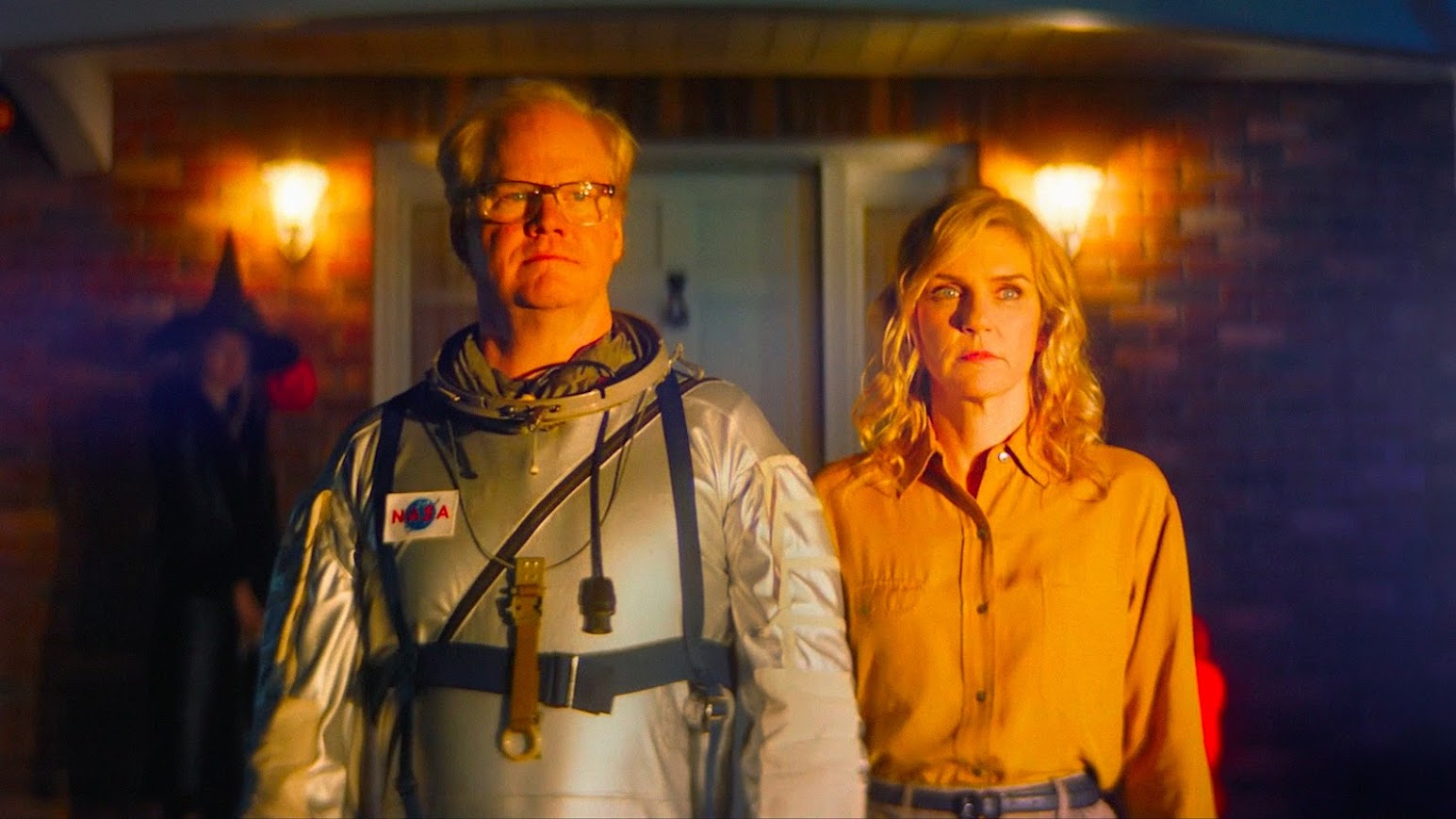
West's drama "Linoleum"
(USA 2022 | 101 min.). The film tells the story of a
dysfunctional family in suburban Ohio, where
the wife and the daughter have to deal with the
father who starts to fulfill his childhood
dream by building his own rocket ship using
satellite debris falling from the sky.
Michelle Yeoh
(Photo: Thomas Laisne/Getty Images)
The festival pays tribute
to Michelle
Yeoh, one of the most celebrated
actors working today. On Friday, April 29
at the
Castro
Theater, actress Sandra
Oh will join Michelle
Yeoh for an on-stage conversation.
In this new film, Jenny
Slate plays the voice of Marcel, an
adorable one-inch-tall shell who tries to
find connection with his long-lost family.
Narrative Features
Besides the films at big
nights and special events, the festival
selected additional 23
international
and 4
US narrative features, many of them are award
winners in the film festival circuit. Here are a few
samplers of this year's selection.
Even though the rate of serious crime such as
murder is extremely low and gun violence is
extraordinarily rare in China, stories involving
murders and guns have been a frequent
subject for many Chinese independent filmmakers,
such as Diao
Yi'nan. As Diao's mentee, the
writer-director Zhang
Ji delivers yet another crime tale involving
murders and guns in his feature directorial
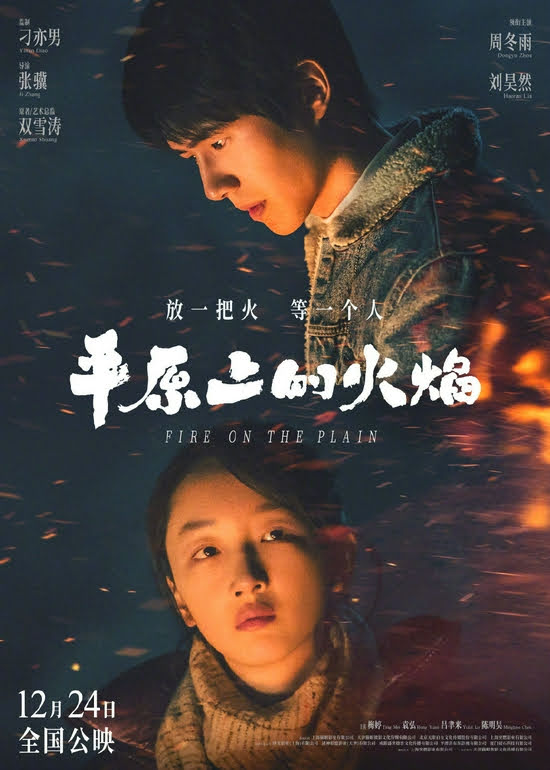
debut "Fire
on the Plain," which also credits Diao
as the executive producer. It's no surprise that
the film is imprinted with Diao's influence when it comes to
style and storytelling.
The story begins in 1997 in the cold and snowy
Northeast region of China, a cop Jiang Bufan
(Yuan
Hong) is on a taxi driver's murder case. Bufan
is also a mentor to the rebellious Zhuang Shu
(Liu
Haoran) who often hangs out with mischievous
youngsters playing pranks. At home, Shu resents his
father's upstart as the leader in a factory while
most factory workers are falling behind. One of
these workers is the humble Li Shoulian
(Wang
Xuebing) who raises his daughter Li Fei
(Zhou
Dongyu) alone. Fei studies painting with Shu's
mom Fu Dongxin (Mei
Ting) and frequently visits Shu's home, and Shu
develops a crush on Fei.
One night, Bufan is also killed and the murder case
he is working on turns cold. Twelve years later,
Shu becomes a cop himself. When he revisits the
cold case Bufan left behind, the truth turns out to
be more devastating than he expected.
While the story is not all that convincing (it's an
adaptation from a novel), the ensemble
performance is top-notch. The grim atmosphere in
dark lighting reflects the mindset of these
characters. Many of them struggle to survive and
often find their hopes and dreams evaporate despite
their best efforts and hard-work.
Întregalde
(Romania 2021 | in Romanian/Romany | 104 min.)
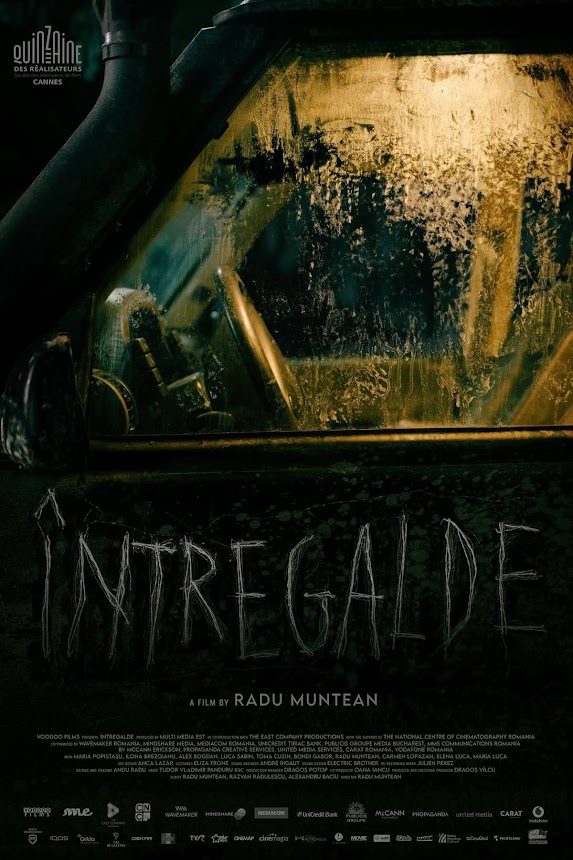
The title of the renowned Romanian writer-director
Radu
Muntean's intelligent new
film "Întregalde"
is the name of a section of country road in
Romania. Three aid workers travel on this
section of the road to deliver goodies to villagers
for the Christmas holiday. Once their car gets
stuck in the mud, the table is turned around and they
become the ones that need help.
The director skillfully crafts the story to examine
the moral compass of these aid workers. It's a
subtle balance between the convenient good deed
they offer and the underlying apathy they may or
may not be conscious about.
Happening
(L'événement | France 2021 | in
French | 100 min.)
Adapted from Annie
Ernaux's autobiography novel, the
director Audrey
Diwan's period drama "Happening"
can't be more timely when many states in the US are
ramping up anti-abortion laws aiming to eventually
ban abortion completely.
The film captures the devastating reality
when the 23-year-old Anne
(Anamaria
Vartolomei) is unwillingly pregnant and
unable to get an abortion when it was
illegal in the '60s in France. It gives a
powerful account of the issues when women
are denied the right for what they want to
do with their own body.
The
Box (La caja | Mexico/USA 2021 | in Spanish
| 90 min.)
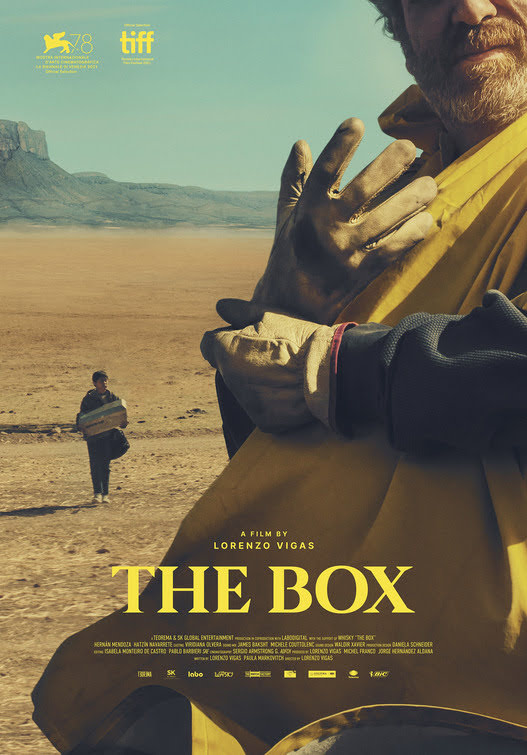
The Venezuelan writer-director Lorenzo
Vigas returns to the festival with his second
narrative feature, "The
Box". It follows a teenage boy
Hatzín Leyva's (Hatzín
Navarrete journey to collect his deceased
father's remains in a steel box.
His trip turns to a different direction after he
meets a local factory promoter, Mario
(Hernán
Mendoza).
Utama
(Bolivia/Uruguay/France 2022 | in Quechua/Spanish | 87
min.)
The writer-director Alejandro
Loayza Grisi's elegant, captivating, and
visually stunning directorial
debut "Utama"
is the kind of movie you want to see on the big
screen in a theater. It reveals a part of the
world that you probably have never seen before.
It's a couple of miles high in elevation up in the
mountains in Bolivia. The drought is getting worse
and worse, and most Quechua people have abandoned
the land and migrated to the city. But the elderly
couple Virginio (José
Calcina) and Sisa (Luisa
Quispe) live in their mud house and refuse to
leave behind the harsh environment they call home.
Every day, Sisa walks a far distance just to fetch
water and Virginio herds about fifty lovely llamas
wearing pink tassels. There is not a single green
vegetation in sight and it has been more than a
year without any rain. Virginio's health is also
deteriorating and his labored breaths and coughs are
getting worse.
To convince them to move to the city and improve
their living conditions, their grandson Clever
(Santos
Choque) comes to visit. But the stubborn
Virginio believes this place is where he lives and
dies.
The director Alejandro
Loayza Grisi remarkably blends this simple
story with the magnificent landscape. Each frame is
meticulously composed as if you are browsing
photographs at a museum. The striking beauties both
from the landscape and from the nonprofessional
actors are mesmerizing, and you have to see the
film on the big screen to fully grasp the effect.
It's a little puzzling what those llamas eat every
day when there seems to be nothing growing on the
bone dry ground, and how Virginio and Sisa, as well
as other Quechua people, can survive. That question
will certainly be extended when the climate change
gets worse and many other places we call home
become inhabitable.
Documentary Features
The festival's 24 feature documentaries share various
perspectives and unfold non-fictional stories, both in the
US and around the globe. Here are a few of them.
The
Exiles
(USA 2022 | in English/Mandarin | 95 min. |
Documentary)
It might have been a more interesting film if the
film is all about the
fascinating Christine
Choy. Instead, the film splits its focus
between her and the subjects from her footage
decades ago—a few dissidents exiled to the US
from China after the 1989 Tiananmen Square Protest was cracked
down. Christine
Choy pays visits to a few of them in her
footage and provides the opportunity for them to
retell their side of the story three decades later.
Midwives
(Canada/Germany/Myanmar 2021 | in Burmese
| 91 min. | Documentary)
For most people, Myanmar has been known for its
turbulent political climate and its long-lasting
ethnic and religious clash between the Buddhists
and Muslims. We rarely see how they actually live
in such a chaotic and violent environment. The
director Snow
Hnin Ei Hlaing's eye-opening documentary
"Midwives"
shares her incredibly candid observations of the
two midwives' lives in Rakhine State.
The two midwives are Hla, a Buddhist, and her young
apprentice Nyo Nyo, a Muslim. Despite the conflicts
in the community between the two religious
communities, they work together and provide care to
pregnant women of both religions in their makeshift
clinic that is equipped with the minimum level of
medical supplies.
Even though Hla has a big heart and her humanity
trumps prejudice and discrimination toward the
Muslim minority, she isn't a saint either. She
sometimes uses racial slur toward Nyo Nyo which Nyo
Nyo doesn't appreciate. The film is completely
honest without sugar coating over any unpleasant
moments.
Meanwhile, it's heartbreaking to see Nyo Nyo dreams
about moving away from the region to start a new
life, but then she has to face the reality and deal
with the disappointment.
This remarkable film allows us to witness the
devastation the country and its people are
enduring, and it also offers us hope to see that two
women from different religions can come together
and serve the community.
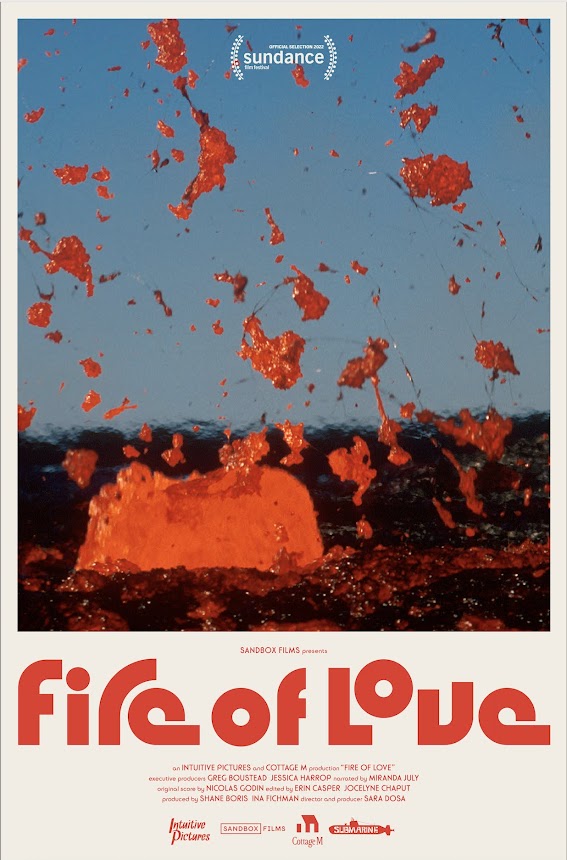
Fire
of Love (Canada/USA 2022 | in
English/French | 93 min. | Documentary)
The story of two extraordinary French
volcanologists Katia and Maurice Krafft are
beautifully told in the director Sara
Dosa's new documentary "Fire of
Love" with stunning images of the
eruption of volcanoes the couple left to us.
After they met in 1966, they fell in love and then
became married to each other as well as to the
passion they shared. The adventurous couple
explored the volcanoes around the globe and
recorded incredible footage until their deaths,
while pursuing what they love.
Their unforgettable story is like the powerful
volcanoes they are chased, full of energy, magic,
and beauty. The film gives us a chance to
appreciate their work, which was done at the cost
of their lives, and to marvel at their love story.
Mid-length and Shorts
Beside feature films, the festival also offers 5
mid-length (30-60 minutes) films and 65 shorts.
My
Dear (亲爱的人 |
Portugal 2022 | in
Chinese/English/Hungarian | 59 min. | Documentary)
My Dear
(Photo: Courtesy of SFFILM)
It has been more than a decade since Academy
Award-winning director Ruby
Yang's documentary "Tongzhi
in Love"
(彼岸浮生 | China 2008 | in
Mandarin | 30 min.) told the stories about the
double lives of gay people in China and won the
Golden Gate Award for Short Documentary at
this
festival in 2009.
In a way, Aragon
Yao's autobiographical directorial debut
"My
Dear" is an update to Yang's film. Even
though many LGBTQ people are beginning to come out
to their parents and extended families in China,
their lives are not any easier than a decade
ago. They still face the pressure of producing an
heir for their parents, and the political
atmosphere toward sexual minorities might have
turned even worse in China.
Studying in Budapest and being apart from his
Iranian boyfriend back in Shanghai, Aragon enjoys
his freedom of being gay and explores his sexuality
by learning drag performance at gay
nightclubs. This provides a moment where he can
escape his parents' nagging for him to get married
with a woman and have children.
Will migration to a foreign country be the only
solution left to his and many other Chinese gays'
dilemma? Or perhaps doing drag will help?
Live-streaming has become a new money-making
enterprise in China, as portrayed in
Wu
Hao's fascinating
documentary "People's
Republic of Desire" (China 2018). Many
people are glued to their screens watching streaming
contents for entertainment, illusion,
companionship, and pornography.
That's the backdrop of the story in
writer-director Baggio
Jiang's short film "Live,"
being screened in the festival's Shorts
5 program.
The film starts with a cab driver live-streaming
his ride. In its merely 22 minutes running time,
the filmmaker constantly twists and turns the
story, with new development in almost every scene,
and terrifically pulls together the chain of events
revolving around the live-streaming.
This short film will challenge the axiom of "seeing is
believing" in this digital age.
The film's title comes from a Chinese
proverb "Crows everywhere are equally
black"
(天下乌鸦一般黑),
which metaphorical implies that bad people are
bad all the same. In 18-year-old school girl
Shengnan's (Chen
Xuanyu) eyes, the crows are those greasy
middle-aged men sitting around a banquet table
that her cousin invited her to as a needed
virgin for a fortune-blessing ceremony. But one
bald, unassuming, and overweight man named
Jianguo (Xue
Baohe) seems to be different. As the night
goes deeper, the couple embarks on a different
direction from the rest of the womanizing crowd.
The film not only quickly establishes these
colorful and humorous characters, but it also
incorporates music, songs, set designs to add
more comical effect. It stays focused and never
steps away from what the title suggests,
especially when the film cuts into its last
frame.
What a terrible year it has been! The pandemic not only has
taken millions of lives and livelihoods, but it also caused
the cancellation of the longest running film festival in
America last year. It's the first time
that SFFILM
Festival (previously known as the San Francisco
International Film Festival) has paused in its history of more than six
decades. As we gradually recover from the carnage,
the festival also returns April 9-18 2021 in a new hybrid
format: the festival will show films both online and at
in-person events. While a majority of the films will be
screened by online streaming across the country through the
SFFILM
website, select films and live performances will take place
at the Fort Mason Flix
drive-in theater next to the waterfront in San
Francisco.
The 64th edition of the festival presents 107 films,
including 26 narrative features, 20 documentary features,
56 short films, and 5 mid-length films (30-50 minutes in
running time). These films represent 41 countries and
regions in 28 languages. Compared to previous years, this
year's festival is at an almost 50% reduction in terms of
the number of films shown. Also, perhaps because of
the pandemic, this year's awards
and attributes are cut down dramatically both in
numbers and the monetary amount.
(You may click on each still image for the corresponding
screening or event's show time and ticketing
information.)
On Friday, April 9, both online and at
the drive-in,
the festival opens
with the world premiere of Chase
Palmer's feature directorial
debut "Naked
Singularity" (USA 2021 | 93 min.). It tells
the story of a New York City public defender who deals
with drug cartels and corrupt cops in his chaotic world.
On Saturday, April 10, the festival presents this year's
centerpiece "Socks on
Fire" (USA | 93 min. | Documentary). The
film's director Bo
McGuire tells his personal family story involving his
homophobic aunt and his drag queen uncle. The
film will be shown both online and at drive-in,
with the in-person event being accompanied by a live
performance featuring local artists Rock M. Sakura
and FREDDIE,
and emceed by the director Bo
McGuire.
This year, the festival simplifies the categorization
of its selections, basing simply on feature vs. shorts,
domestic vs. international, and narrative
vs. documentary. In addition, for the first time, the
festival creates a new category called mid-length
films in which a film runs 30-50 minutes.
There are 16 international narrative features
selected in this year's festival, including
three flashback
titles from last year's canceled lineup.
One of last
year's selections is Nicolás
Rincón Gille's neorealism drama
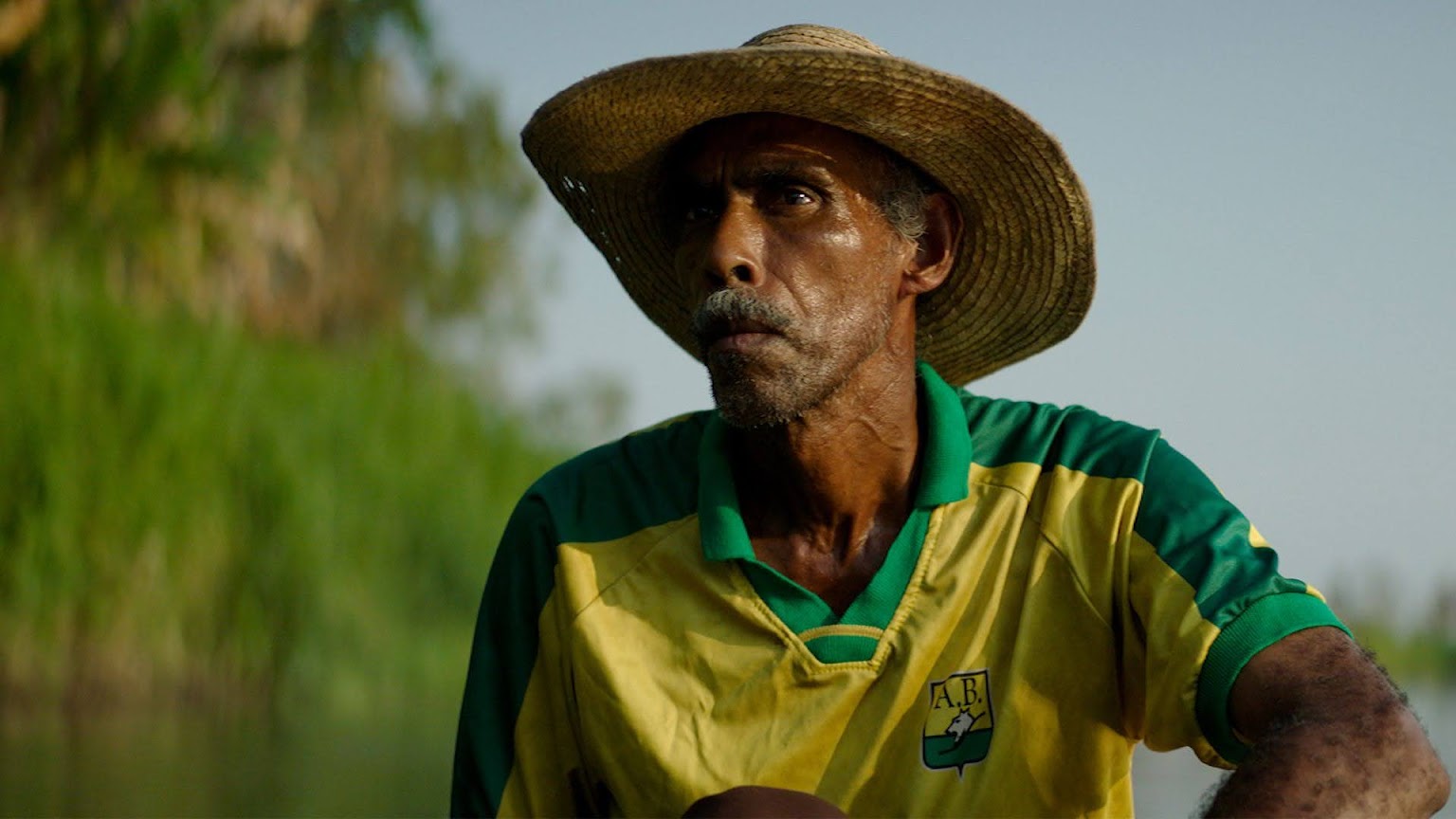
"Valley
of Souls" (Tantas almas |
Colombia/Brazil/Belgium/France 2019 | in Spanish |
137 min.). It unfolds a devastating story of a
grieving father's journey searching for
the bodies of his two sons who are killed by the
right-wing militia in Colombia.
The only film from Asia at this year's festival is
South Korean director Lee
Ran-hee's feature directorial
debut "A
Leave" (휴가 | South Korea
2020 | in Korean | 81 min.). It depicts a mid-aged
workers' struggle to fight for worker's rights while
raising two children.
The winner
of the 2020 GdA Director's Award of
Venice's Giornate
degli Autori, Russian
writer-director Philipp
Yuryev's feature directorial
debut "The
Whaler Boy"
(Китобой
| Russia/Poland/Belgium 2020 | in Russian/English |
93 min.) is not to be missed. It terrifically tells
a captivating story of a 15-year-old boy in a
remote fishing village who falls in love with a webcam
girl from the United States, and he takes on an
incredible journey to meet his love.
There are 10 documentaries in this section
covering a wide range of subjects around the world
through compelling storytelling.
The Oslo-based Turkish-Norwegian
director Nefise
Özkal Lorentzen tells an extraordinary
story of the first female imams in Europe in her
new documentary "Seyran
Ateş: Sex, Revolution and Islam"
(Norway 2021 | in
Turkish/English/German/Chinese/Norwegian | 81
min. | Documentary). The Turkish-German lawyer
Seyran Ateş takes on her personal and
ideological fight against radical Islam's sexual
oppression by creating a modernized Islam
environment at her liberal mosque where there is no
gender segregation and individuals of all sexual
orientations are welcome, but with heavy police
protection.
Taking more than five years, the
director Roberto
Salinas follows a Cuban teenager Alexis from
Havana's Cuban National Ballet School to Florida,
and unwraps Alexis's coming-of-age story
in "Cuban
Dancer" (Italy/Canada/Chile 2021 | in
Spanish/English | 90 min. | Documentary), with many
elegant and delightful dance sequences.
The winner of the Audience
Award and the Impact for
Change Special Jury Award in the World Documentary category at
this year's virtual Sundance Film
Festival, the empowering and inspiring
"Writing
with Fire" (India 2021 | in Hindi | 92
min. | Documentary) covers the only online
newspaper run by women in Indian reporting on the
lowest class Dalits, also known as the
Untouchables. The co-directors Sushmit
Ghosh and Rintu
Thomas follow the newspaper's reporter Meera
and show us how Meera and her team make a powerful
impact with their smartphones.
Meet Lily
Hevesh, the only female domino artist in her
field who designs many fantastic domino
projects. She is the subject of the
director Jeremy
Workman's crowd pleasing
documentary "Lily Topples
the World" (USA 2021 | 91 min. |
Documentary). The film follows Lily, as well as her
dreams and passion, for three years and showcases
some of her amazing work.
"Homeroom"
(USA 2021 | 90 min. | Documentary), the third
chapter of documentarian Peter
Nicks's Oakland trilogy, zooms in
on Oakland's public high school. The film captures
the challenges the Class of 2020 faced last year
and the resilience that these students exhibited
during the pandemic.
Renowned contemporary artist Trevor Paglen
travels in the Nevada desert, and the
director Yaara
Bou Melham tags along and listens to him
talking about his new project—launching a
satellite. The result is an intriguing
documentary "Unseen
Skies" (USA 2021 | 98 min. |
Documentary) that reflects Paglen's stunning body
of work.
The longest running film festival in America and an iconic
fixture in the city's film culture, SFFILM Festival
(also known as San Francisco International Film
Festival), presents its 62nd edition April 10-23,
2019. This year, the festival showcases 163 films, including
46 narrative features, 40 documentary features, 3 episodic
programs, and 70 shorts, in 36 languages representing 50
countries and regions. (Click on each still image for
corresponding screening or event.)
On Wednesday, April 10, for the first time in its history, the
festival kicks
off with an episode of an
upcoming streaming
mini-series. However,
it is not just any mini-series,
it is "Armistead
Maupin's Tales of the City" (USA 2019 | 57
min.), which is based on Armistead
Maupin's novels that have captured San Francisco's heart
and soul for decades.
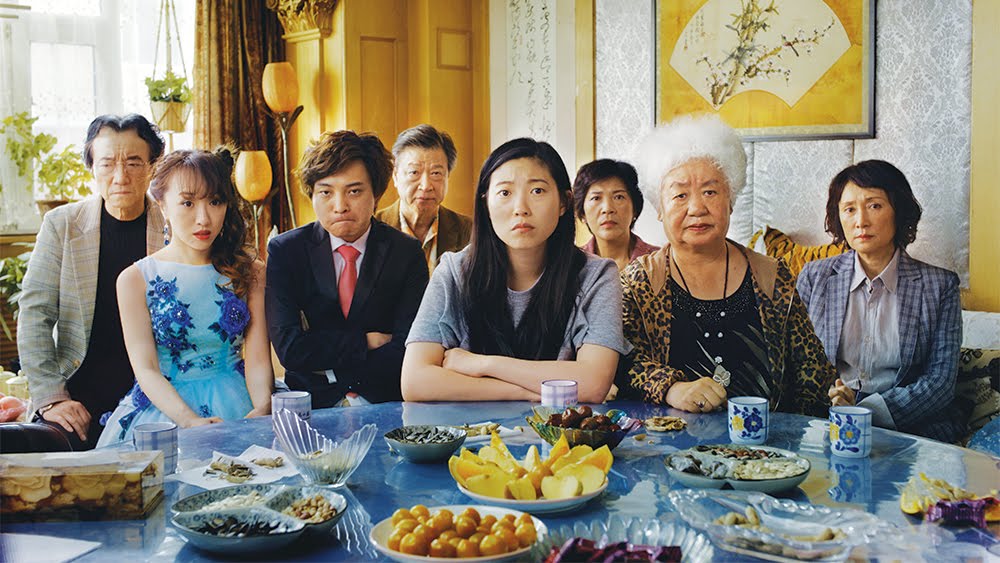
About a week into the festival, on Thursday, April 18, the
festival's centerpiece
presentation features writer-director
Lulu
Wang's acclaimed Sundance
hit "The
Farewell" (USA 2019 | in English/Mandarin |
98 min.), a slightly fictionalized and
heartfelt experience
about her extended family bidding farewell to her
grandmother.
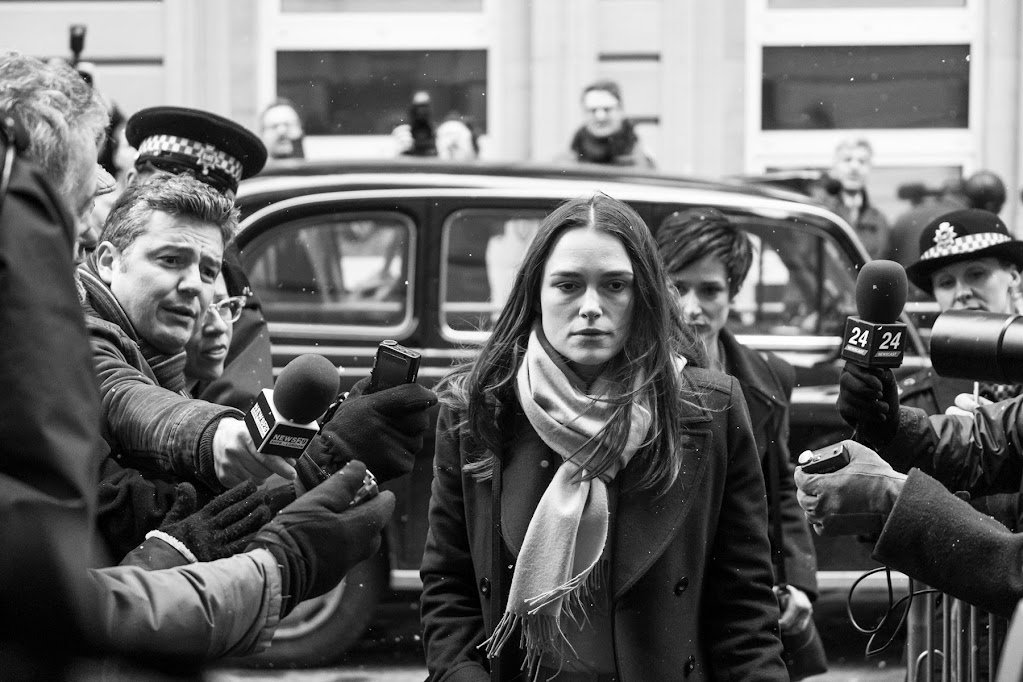
Although the festival runs through April 23,
its closing
night presentation, the
writer-director Gavin
Hood's political thriller "Official
Secrets" (USA 2019 | 112 min.), is scheduled
for Sunday, April 21. It tells the story about a British
spy Katharine
Gun who blew the whistle on the voting of a UN resolution
regarding the Iraq War.
The year's festival pays tribute to the following four
outstanding artists with an on-stage conversation
followed by a film screening:
Marquee
Presentations includes nine narratives, 15
documentaries, and one episode of a TV series that
have recently captured the headlines and stimulated
excitement in film festival circles.
Premiered at this year's SXSW, Olivia
Wilde's hilarious directorial
debut "Booksmart"
(USA 2019 | 105 min.) tells the story of two
straight-A students behaving badly.
The director Rachel
Lears's timely "Knock
Down the House" (USA 2019 | 86 min. |
Documentary) takes an inside look at the
extraordinary grassroots campaigns in 2018,
featuring the new congresswoman Alexandria
Ocasio-Cortez (AOC) from New York City.
Masters
consists of six feature films from influential
filmmakers around the world and half of them this
year are documentaries.
The winner of Directing
Prize for U.S. Documentary at this year's
Sundance Film Festival "American
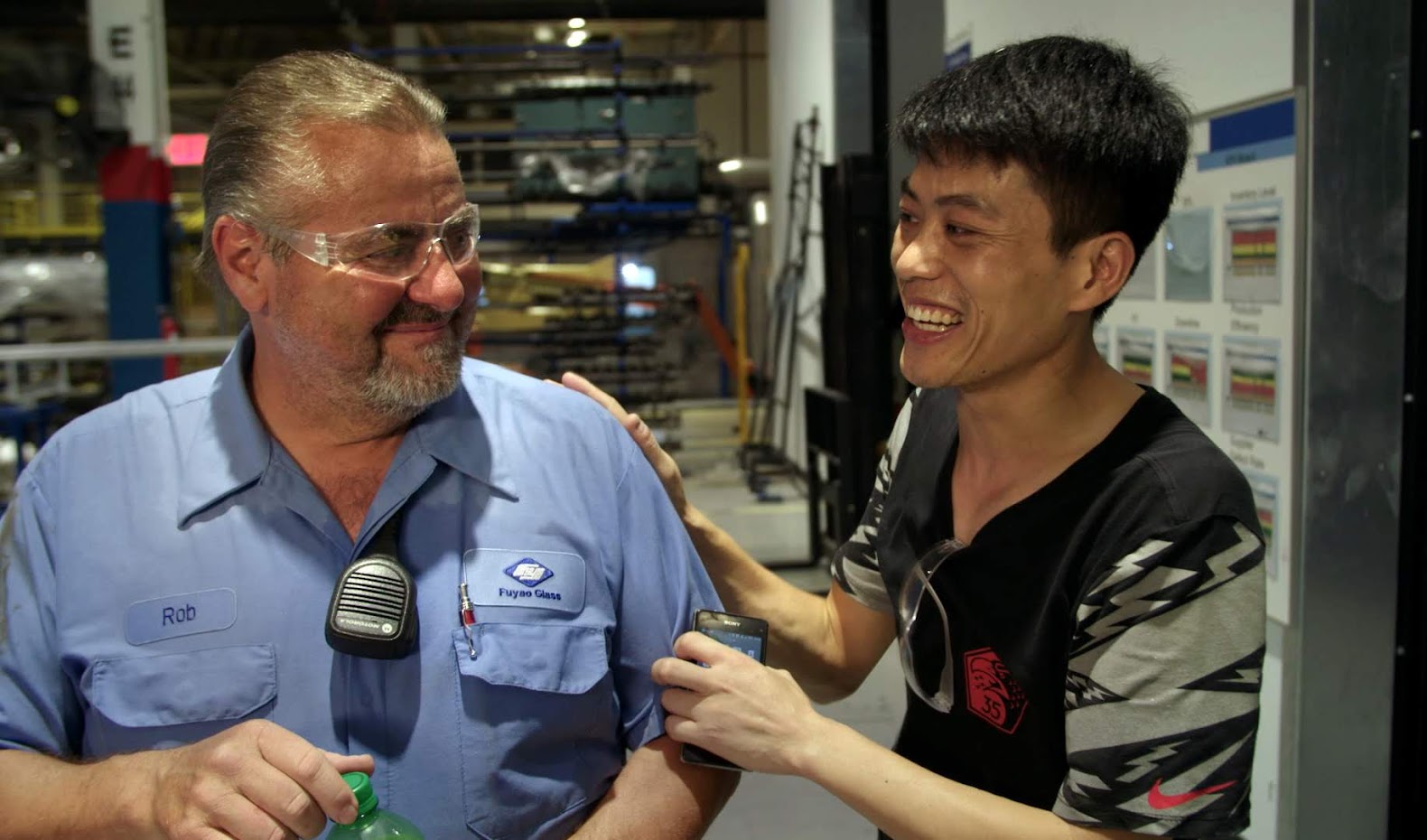
Factory" (USA 2019 | 115 min. | in
English/Mandarin | Documentary), directed
by Steven
Bognar and Julia
Reichert, tells a story about a Chinese
billionaire's endeavor of manufacturing car window
glass in America's economically struggling
heartland, Ohio.
Known to many as the director of "Lan
Yu" (藍宇 | 2001), arguably the
first film portraying gay relationship in Beijing, the
Hong Kong director Stanley
Kwan (關錦鵬) has been on almost a
decade-long hiatus from filmmaking. Returning to the
commanding chair, his latest film
"First Night
Nerves"
(八個女人一台戲
| Hong Kong 2018 | in Cantonese/Mandarin | 100 min.) is a
colorful melodrama set in contemporary Hong Kong.
The drama starts to unfold a week before the premier of
a play called "Two Sisters," directed by a transgender
woman. The play's two lead actresses Yuan Xiuling
(Sammi
Cheng) and He Yuwen (Gigi
Leung), a pair of old time rivals, have plenty of
resentment to resolve before the collaboration on
stage. To complicate the situation, many more women are
involved in the off-stage drama including Xiuling's late
husband's sister Cheng Cong (Angie
Chiu) who financed the production and Xiuling's
obsessed fan Fu Sha
(Bai
Baihe), a lesbian from a wealthy family. As the
play's premier approaches, the off-stage drama takes the
center stage in the film.
Visually, the film is exquisitely colorful with the
vibrant contemporary Hong Kong as the backdrop. Of
course, everything moves really fast in Hong Kong, so
are the characters showing up in this film. As a result,
it takes a while to figure out who is who and what is their
relationship to each other in their chaotic and
gossipy entertainment circle, and what they are
fussing about. But a more pressing question might be if
these characters deserve the attention we give them when
they are off-stage.
After 28 years since the Soviet Union's collapse,
the 87-year-old Mikhail Gorbachev
(Михаил
Горбачев),
becomes the subject of the documentary "Meeting
Gorbachev" (UK/USA/Germany | in
Russian/English/German/Polish | 90 min. | Documentary).
Directed by veteran documentarians Werner Herzog
and Andre
Singer, the film revisits historical events
and converses with the man who played a vital role
decades ago.
Global
Visions assembles nine narratives and ten
documentaries—a noticeable reduced number of films
compared to previous years#8212samples contemporary world
cinema. There are three films from Asia.
The Singaporean director Eric Khoo
(邱金海) brings a sentimental family drama
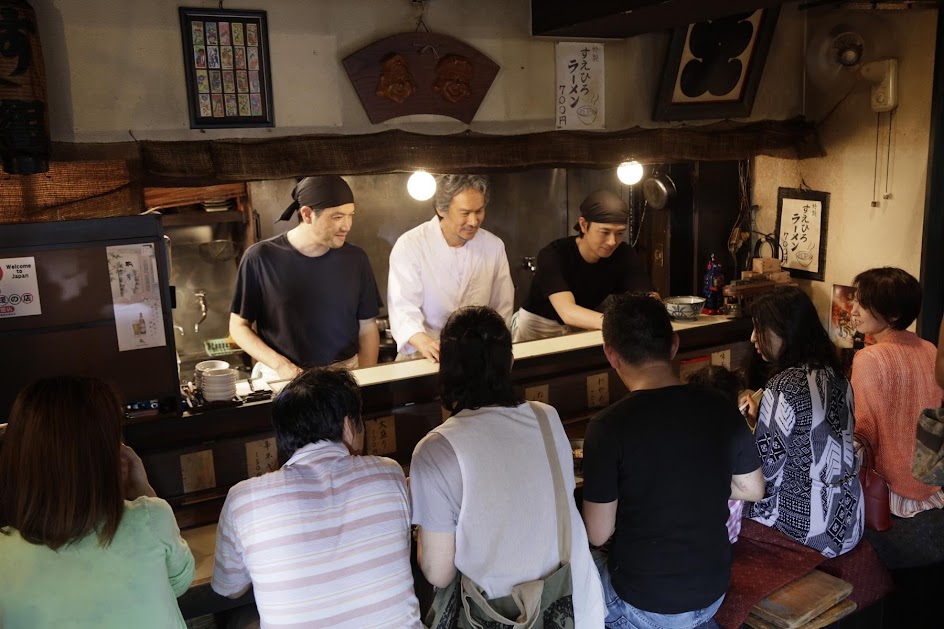
"Ramen
Shop"
(情牽拉麵茶 |
Singapore/Japan/France 2018 | in
Japanese/Mandarin/English | 79 min.) to the festival,
featuring food images that you probably often see on
Instagram. He
crafts a story revolving around cooking, which his
characters use as the vehicle during journeys to
uncover family mysteries, to reconcile conflicts,
to rebuild family ties, and to express love.
The Japanese director Ryûsuke
Hamaguchi (濱口 竜介)
returns to the festival with a much shorter film than
his previous almost five-and-half-a-hour
long "Happy
Hour"
(ハッピーアワー
| 2015). Based on a novel, he tells an unusual love story in
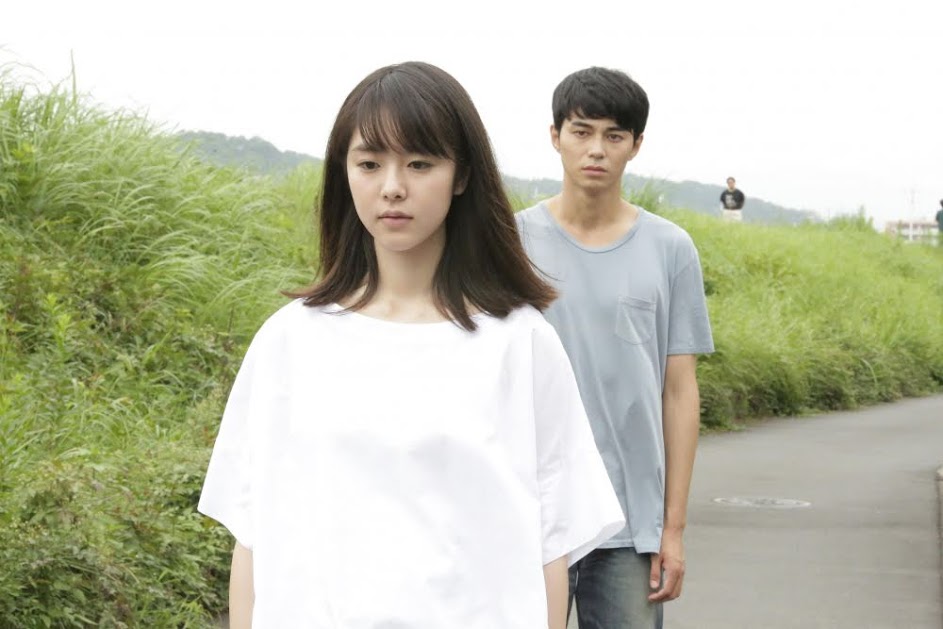
"Asako I
& II"
(寝ても覚めても
| Japan/France 2018 | in Japanese | 119 min.).
When Asako (Erika
Karata) meets handsome Baku (Masahiro
Higashide) on a street in Osaka, they kiss and
fall in love at first sight. But one night, Baku
leaves the apartment to buy shoes and never
returns. Two years later, moving on with her life,
Asako relocates to Tokyo where she runs into a
polite business man Ryôhei
(also Masahiro
Higashide) who looks exactly like Baku. After
initial resistance, she falls for him hard. A few
years later, Ryôhei gets transferred to work
in Osaka, the couple looks forward to a new chapter
of their lives. Then Baku, now a heartthrob model,
shows up. Asako faces an agonizing choice.
Despite an only-in-a-movie plot, the superb
performances from Erika
Karata and Masahiro
Higashide make the movie afloat. Even though
it's hard to rationalize the characters' behaviors,
it's much easier to resonate with their emotions.
Although the Korean director Hong
Sang-soo is absent from this year's festival, his
influence and style is vividly on display in
the Korean writer-director Jang
Woo-jin's (장우진) third
feature "Winter's
Night"
(겨울밤에 | South Korea
2018 | in Korean | 98 min.). This slow-burn quiet
film explores the evolving relationship between a
middle-aged married couple.
After 30 years of marriage, Eun-ju
(Seo
Young-hwa) and Heung-ju (Yang
Heung-ju) return to a temple where they first
met when they were young students. That visit
doesn't seem to ease the tension between the
couple. When Eun-ju realizes that she misplaced her
phone, she insists on going back to the temple to
search for it. The night is falling, and the temple
is closed. They have to stay at a bed and breakfast
to drink, sing, and talk over their relationship.
Overnight, they meet another young couple who
resembles the early years of themselves.
Even though a frosty night at a remote location is
quite different from a soju
fueled urban cafe setting in Hong
Sang-soo's film, the conversational
storytelling style is very much similar and the
focus is never far from dealing with
relationship. Interestingly, the director's use of
a young couple not only serves as a parallel to the
older couple's past, but also coincides with the
craft in another film at the
festival—"Suburban
Birds." This film might challenge the
patience of some viewers but certainly will delight
the fan base of Hong
Sang-soo.
Golden
Gate Award (GGA) Competition
nominates nine narratives and ten documentary
features, as well as a handful of short films
for the generous cash prizes totaling nearly
$40,000.
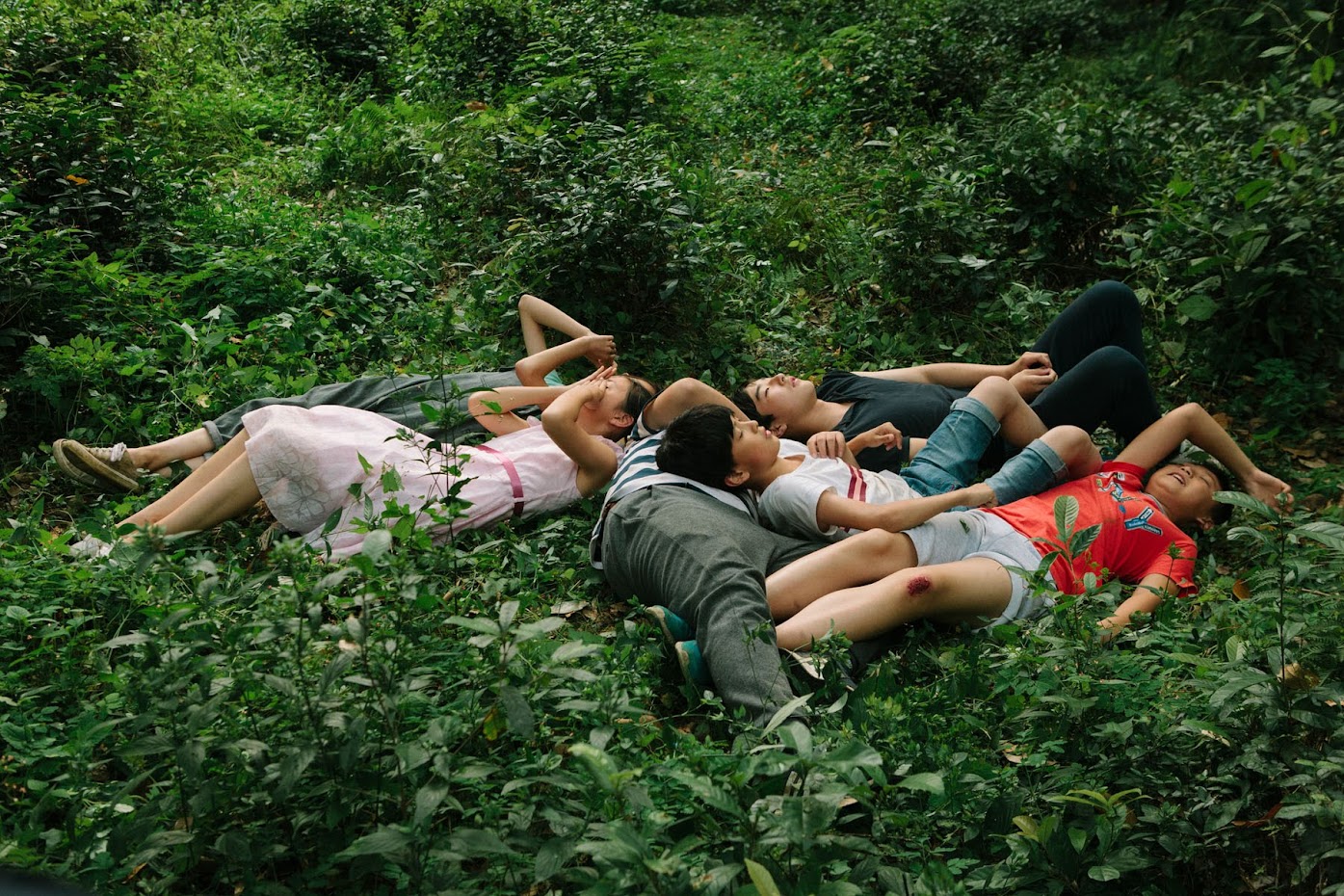
The enigmatic mind-teaser "Suburban
Birds" (郊区的鸟 |
China 2018 | in Mandarin | 118 min.) is the noteworthy
directorial debut from the Chinese
writer-director Qiu
Sheng (仇晟). He starts with a story
about a civil engineering team surveying leaning
buildings, but abruptly switches the story to a
group of young kids playing in and out of school while
keeping the characters' names unchanged. He playfully
constructs the film and mysteriously intertwines the two
narratives into an alluring craft.
Based on Leelo
Tungal's autobiographic novel, the
writer-director Moonika
Siimets's terrific directorial debut
"The
Little Comrade" (Seltsimees laps |
Estonia 2018 | in Estonian/Russian | 99 min.)
illustrates the horror in Estonia's history when it
was ruled by Stalin's iron fist in 1950.
Curious six-year-old Leelo (Helena
Maria Reisner) begins to learn the world around
her when Estonia just became part of the Soviet
Union in 1950. Her dad Feliks (Tambet
Tuisk) is an accomplished athlete earning
plenty of medals for Estonia. Her mom is a beloved
school teacher. But under Stalin's rule, it's
forbidden to assume the identity as an Estonian. As
a result, Leelo's mom is arrested by the KGB and
Leelo desperately tries to be a good girl in order
to make her mom return.
With an affectionate lens, Leelo's subtle and
innocent reactions to daily happenings is
wonderfully captured on screen. The
director Moonika
Siimets tells her story from a child's
perspective and depicts how the six-year-old makes
sense of the cruel reality and horrific political
atmosphere. Leelo believes that by becoming a
pioneer for the communist party, she will be
rewarded by her mom's homecoming. Her naive effort
is both charming and heartbreaking.
The film is a felicitous tribute to the centennial
anniversary of Estonia.
Dark
Wave has four films that continue to feed
the appetite of midnight horror and sick
pleasure seekers.
Vanguard shows three experimental films
that remind you to keep the mind open and
challenge your brain either in connecting the
dots in the filmmakers' storytelling, or simply
in finding those dots.
Short Films curates 70 short films into eight
programs which tell stories in narrative,
documentary, animation, or experimental forms.